Now Reading: The True Cost of OpenAI’s o3: High Performance, Higher Expenses?
-
01
The True Cost of OpenAI’s o3: High Performance, Higher Expenses?
The True Cost of OpenAI’s o3: High Performance, Higher Expenses?
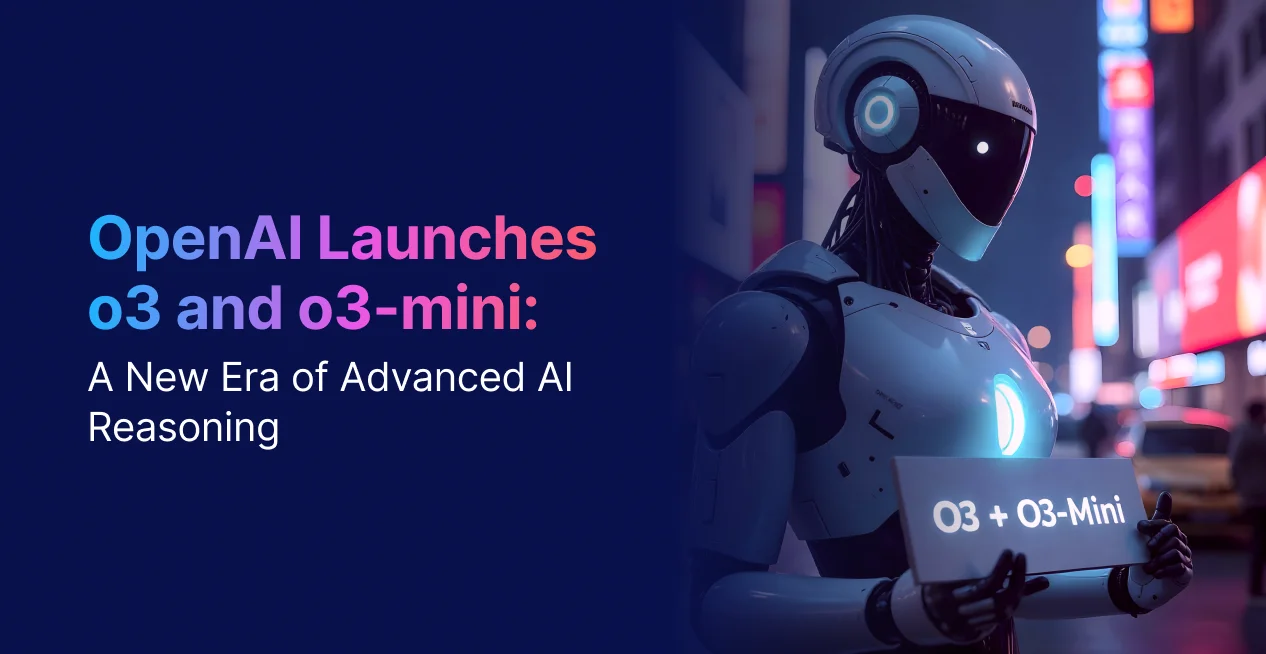
Table of Contents
OpenAI’s latest artificial intelligence model, o3, has generated significant buzz in the AI community since its introduction in December 2024. With its advanced reasoning capabilities and impressive problem-solving performance, it has positioned itself as a major leap forward in the AI field. However, while the capabilities of o3 have been celebrated, recent analyses and revised cost estimates have sparked concerns about its economic viability and environmental impact. The operational costs associated with running o3, especially at its high-compute configuration, appear to be substantially higher than initially anticipated, raising important questions about the long-term sustainability of such models.
Understanding OpenAI’s o3 Model
The OpenAI o3 model is not just another AI system; its innovative “chain of thought” process sets it apart from traditional models. This method allows the model to deliberate internally, analyzing and reflecting on complex tasks before generating its final response. In contrast to earlier iterations of AI, where responses were generated quickly but without much internal processing, o3’s approach gives it an enhanced ability to reason through intricate problems. This is particularly advantageous in fields such as mathematics, coding, and scientific research, where deeper analysis and more structured thinking are required.
As the tech industry grapples with the challenges of AI development and workforce changes, other companies, like Automattic, have also been forced to rethink their operations. Recently, Automattic laid off 16% of its staff, highlighting the broader economic pressures in tech. Read more about it here.
Additionally, the OpenAI o3 model is built to be adjustable, allowing users to select different levels of compute resources based on their needs. This flexibility lets users optimize the balance between computational expenses and the quality of performance. The more powerful configurations of o3 yield impressive results but come at a high cost in terms of resources. To improve its performance, o3 also employs reinforcement learning during its training process, refining its ability to make decisions with the goal of minimizing errors and maximizing reliability. This adaptive learning process plays a crucial role in enhancing OpenAI o3’s efficiency, but it also comes with the trade-off of requiring significant computational power.
Revised Cost Estimates
When OpenAI o3 was first introduced, its operational costs were believed to be relatively manageable. The Arc Prize Foundation, a prominent entity in AI benchmarking, initially estimated that running o3 in its high-compute configuration would cost approximately $3,000 per task on the ARC-AGI benchmark, a well-known AI performance evaluation. However, recent analyses have revised these estimates, and it is now suggested that the true cost could be as high as $30,000 per task, depending on the specific compute settings used. This is a staggering increase and highlights just how much computational power OpenAI o3 demands, particularly in its most powerful configuration.
For context, it’s reported that the high-configuration version of o3 consumes 172 times more computational resources than its low-compute counterpart. This drastic disparity means that the costs associated with running o3 can escalate quickly, especially when large-scale or complex tasks are involved. These revisions raise concerns not only about the model’s affordability but also its practical scalability. As AI adoption grows and models like o3 become more widely used, it remains to be seen whether companies and institutions will be able to bear such high operational costs, particularly for non-critical applications.
Environmental Considerations
While the financial implications of operating o3 are substantial, the environmental impact of such models is equally concerning. Running AI models at high compute levels requires vast amounts of energy. Recent studies have estimated that completing a single high-compute task on the ARC-AGI benchmark with o3 consumes about 1,785 kilowatt-hours (kWh) of electricity—roughly the equivalent of an average U.S. household’s monthly energy consumption. Beyond just energy use, this level of consumption translates into a significant carbon footprint, with each task producing approximately 684 kilograms of CO₂.
Given the growing concerns over climate change and the increasing pressure on industries to reduce their carbon emissions, the environmental cost of operating such advanced AI models cannot be ignored. As AI continues to develop and models like o3 become more prevalent, there is a pressing need to explore ways to reduce the energy consumption associated with these systems. The development of more energy-efficient AI technologies, or the use of renewable energy sources to power data centers, will be crucial in mitigating the environmental impact of AI deployment.
Comparative Analysis with Human Labor
Another interesting aspect of the cost debate surrounding o3 is its comparison to human labor. While AI systems like o3 are capable of automating complex tasks, the costs associated with these systems may, in some cases, outweigh those of human workers. For instance, completing the ARC-AGI benchmark with o3 in its high-compute configuration could cost up to $1.7 million, depending on the number of tasks processed. In contrast, human labor, particularly for repetitive or well-defined tasks, might only require a small fraction of that expenditure. Human workers in certain fields could be compensated around $5 per task, highlighting the stark contrast between the costs of AI automation and manual labor.
This discrepancy raises important questions about the economic advantages of using high-cost AI systems in scenarios where human labor may be more cost-effective. While AI is undoubtedly transforming industries and improving efficiency in many areas, it is important to consider whether the deployment of advanced models like o3 is truly the best economic choice in every case. The financial benefits of using AI must be carefully weighed against its costs and the availability of human labor alternatives, especially in industries where labor costs are relatively low.
Industry Implications and Responses
The high operational costs associated with models like o3 are likely to have far-reaching implications for the AI industry. As companies look to integrate advanced AI systems into their operations, they will need to carefully consider the balance between performance and cost. While powerful AI models like o3 offer impressive capabilities, the financial and environmental costs of deploying these models at scale could hinder widespread adoption.
In response to these concerns, there has been a growing emphasis on developing lightweight, cost-effective AI models that maintain high performance while minimizing computational demands. These models aim to deliver similar results to larger models like o3 but at a fraction of the cost and energy usage. Advances in AI algorithms, inference techniques, and hardware optimization are all contributing to the development of more efficient models. The rise of such technologies not only addresses cost and environmental concerns but also makes AI more accessible to smaller companies and organizations that may have previously been priced out of using advanced AI systems.
Conclusion
OpenAI’s o3 model represents a major step forward in AI reasoning and problem-solving capabilities, but its substantial operational costs and environmental impact present serious challenges. The revised cost estimates, which indicate that running o3 at high-compute levels can reach tens of thousands of dollars per task, are concerning for companies looking to adopt AI at scale. Moreover, the environmental impact of such energy-intensive models underscores the need for sustainable AI development practices.
As the AI industry continues to evolve, it will be essential for developers and researchers to prioritize efficiency, cost-effectiveness, and sustainability in their designs. While o3’s remarkable performance highlights the potential of AI, the broader implications of its operational costs must be carefully considered to ensure that future AI advancements are both economically and environmentally viable.